Let’s see what will happen with our data if we decide to declare some values and make a loop for it as a module to insert.
Open Excel.
Write some values from 1 to 18 with more then 3 numbers after comma, left second column blank, and write some words in the 3rd column
imagine, that this values are kind of data genereted form the report with no headers.
now insert a new row above the values, to get the report similar to this one below:
| 1234,23456 | abscksksksa | |
| 1233,45679 | abscksksksa | |
| 1232,679016 | abscksksksa | |
| 1231,90124 | abscksksksa | |
| 1231,123471 | abscksksksa | |
| 1230,34570 | abscksksksa | |
| 1229,567927 | abscksksksa | |
| 1228,79015 | abscksksksa | |
| 1228,012382 | abscksksksa | |
| 1227,23461 | abscksksksa | |
| 1226,456838 | abscksksksa | |
| 1225,67907 | abscksksksa | |
| 1224,901293 | abscksksksa | |
| 1224,12352 | abscksksksa | |
| 1223,345749 | abscksksksa | |
| 1222,56798 | abscksksksa | |
| 1221,790204 | abscksksksa | |
| 1221,01243 | abscksksksa |
Now insert module named:
a result
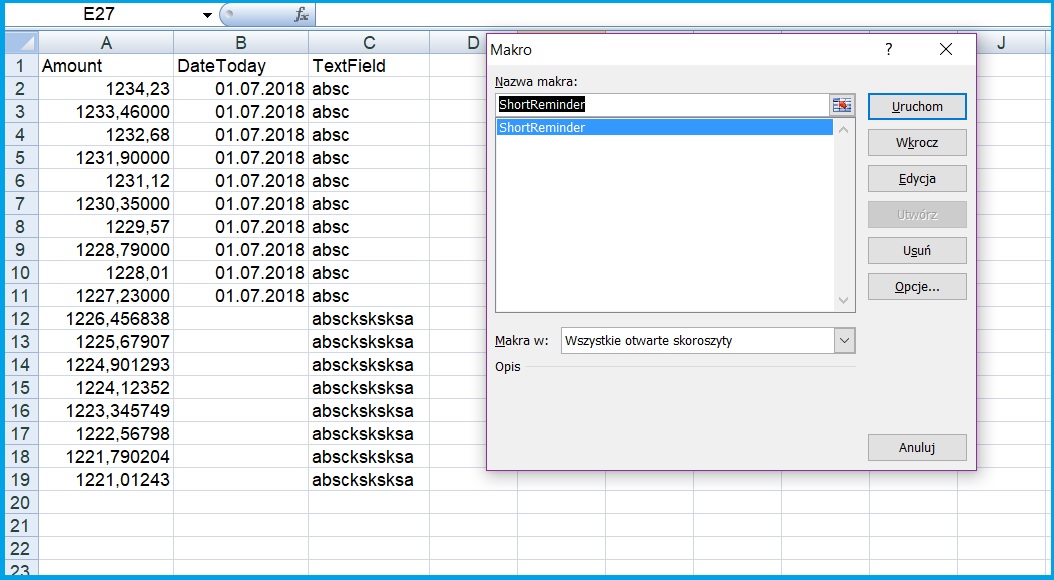
as you can see only values till 11 has been changed, regrding to the condition set into loop. There is one little mistake in a code, will someone guess what is it? VBA is flexible as much, that we cannot see this error from user side.
Now I am going to do same things but with the real data from my project.
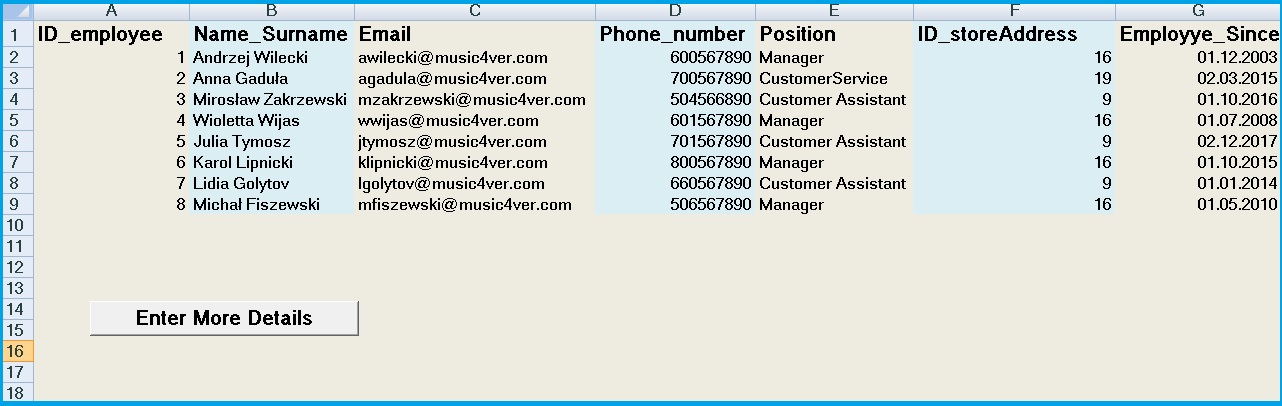
If you have already practised data export from MS SQL into Excel or Access, please use table Logins.xls or .xlsx and save as .xlsm
and add a column as follow
| Employye_Since |
| 01.12.2003 |
| 02.03.2015 |
| 01.10.2016 |
| 01.07.2008 |
| 02.12.2017 |
| 01.10.2015 |
| 01.01.2014 |
| 01.05.2010 |
insert module:
by clicking on a bottom : ENTER DATA
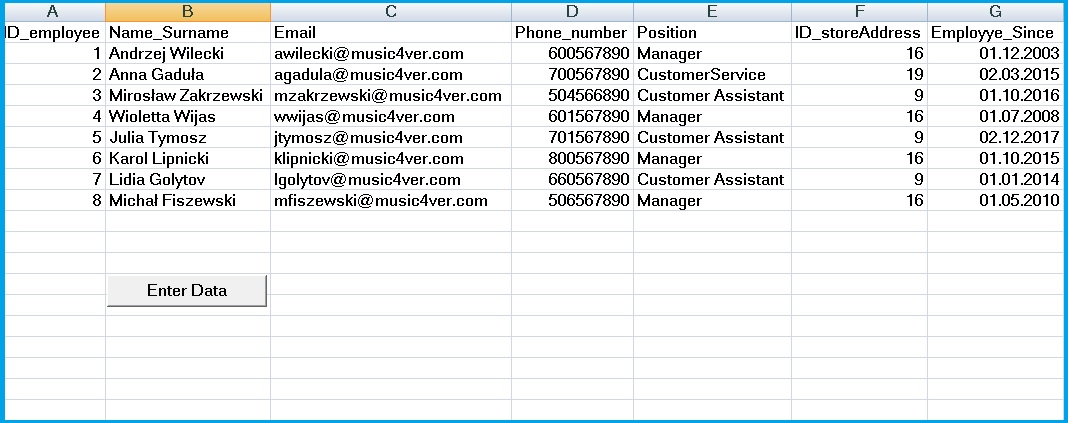
after enter the formulas:
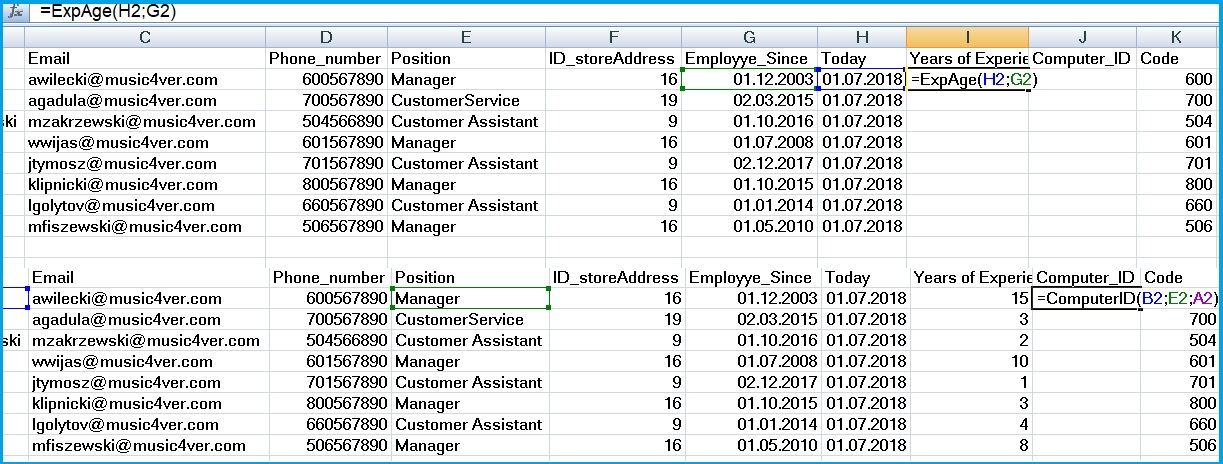
a complete result
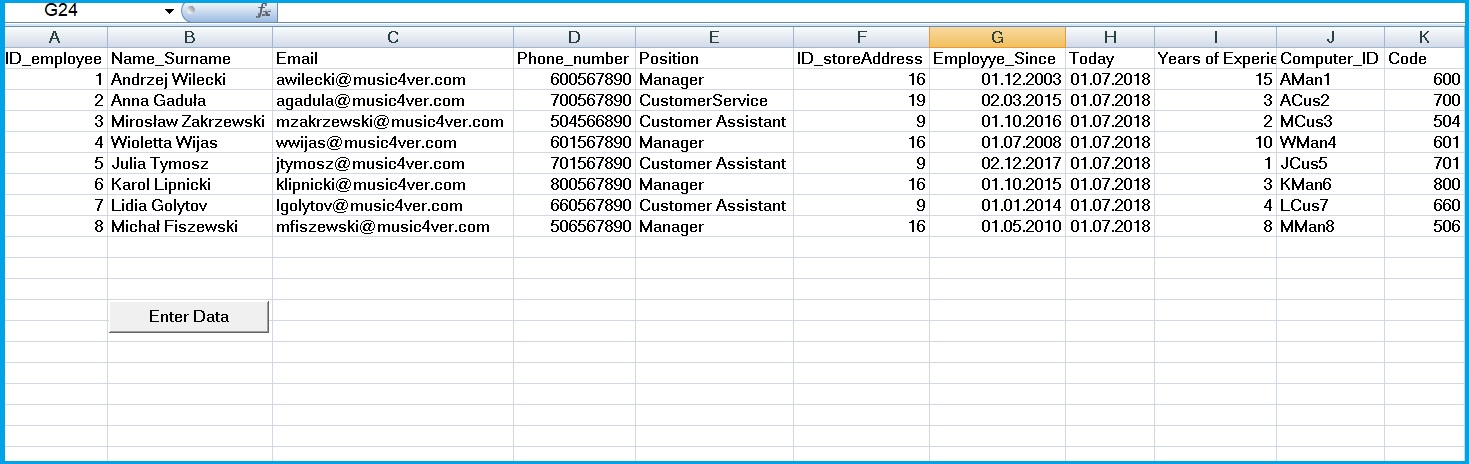
or we can make it looks more approachable
 Heart4DataScience