OS implements some useful functions on pathnames. Path parameters can be passed as either strings, or bytes. Applications are encouraged to represent file names as (Unicode) character strings.
import os

#The function returns a tuple of data retrieved from the csv file
def get_data(csv_file):

 data = []  # declare an empty list for data from a file

  if os.path.isfile(csv_file):  # file source verification
      with open(csv_file, "r") as content:  # open 4 read
          for lines in content:
             lines = lines.replace("\n", "")
             lines = lines.replace("\r", "")  # remove line breaks

# adding items to the stamp and the stamp to the list
              data.append(tuple(lines.split(",")))
    else:
        print ("Chosen file", csv_file, "does not exist!")

    return tuple(data)  # transform the list into a tuple and return it
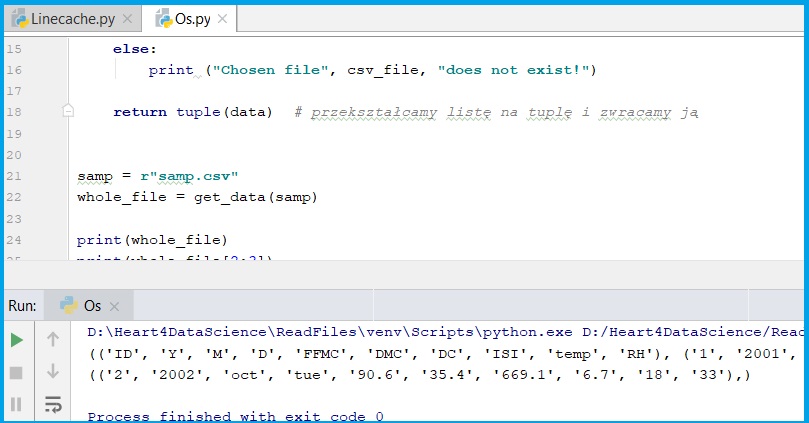
samp = r"samp.csv"
whole_file = get_data(samp)

print(whole_file)
print(whole_file[2:3])
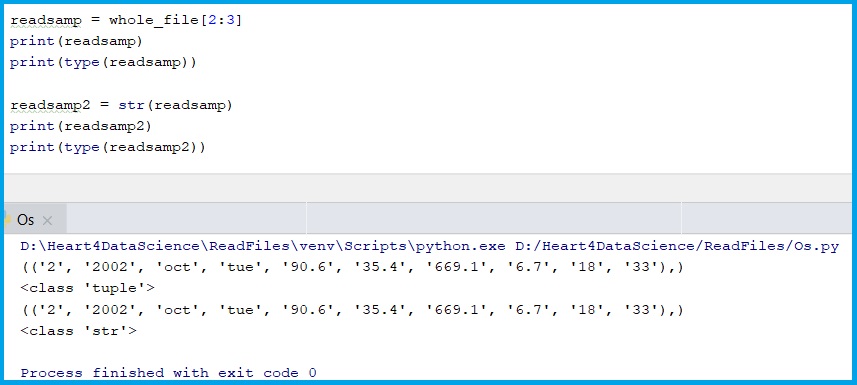
readsamp = whole_file[2:3]
print(readsamp)
print(type(readsamp))

readsamp2 = str(readsamp)
print(readsamp2)
print(type(readsamp2))
#saving data to a new csv file
plik = open("samp2.csv", "w")
plik.write(readsamp2)
plik.close


# change the content
sourcefile = open(samp).readlines()
destinyline = open(samp, "w")

for x in sourcefile:
    destinyline.write(x.replace("X", "Y"))

destinyline.close()
 Heart4DataScience