RANGE
is used to generate a sequence of numbers according to given parameters. Really seful in loops declarations, lists or sets of numbers.
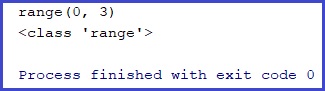
nums1 = range(3)
print(nums1)
print(type(nums1))
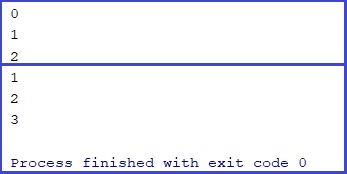
for x in range(3):
    print(x)

for x in range(1,4):
    print(x)
nums2 = range(1,10,2)
for x in nums2:
    print(x)
nums3 = list(nums2)
print(nums3)
nums2 = list(range(10))
print(nums2)
IF STATEMENTS
Simple expressions
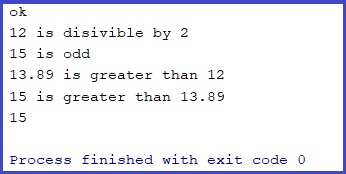
if expr1 < expr4:
    print("ok")

if expr1 % 2 == 0:
    print(expr1,"is disivible by 2")

if expr4 % 2 == 0:
    print(expr4,"is even")
else:
    print(expr4,"is odd")
Comparing conditions
if expr1 < int(expr3):
    print(expr3,"is greater than",expr1)
elif expr1 == int(expr3):
    print(expr3, "is equal", expr1)
else:
    print(expr3, "is smaller than", expr1)
One line statement
#one line statement
if expr4 > int(expr3): print(expr4,"is greater than",expr3)
print(expr4) if expr4 > expr1 else print(expr1)
LOOPS
While Loop
# WHILE simple one
x = 0
while x < 4:
  print(x)
  x += 1
#output: 1 2 3

# WHILE with BREAK
x = 0
while x >= 0:
  print(x)
  if x == 10:
    break
  x += 1 #output: 1 2 3 4 5 6 7 8 9 10

x = 0
while x >= 0:
  print(x+2)
  if x == 10:
    break
  x += 1 #output:  2 3 4 5 6 7 8 9 10 11 12

x = 0
while x >= 0:
  print(x)
  if x == 10:
    break
  x += 2 #output:  0 2  4  6  8  10

# WHILE YIELD in range def as function
#1)
def xRange(start, stop, step):
    i = start
    while i < stop:
        yield i
        i += step

for i in xRange(0.0, 0.3, 0.1):
    print(i) # output: 0.0 0.1 0.2

#2)
def xRange(start,stop, step):
    i = start
    while i < stop:
        yield i
        i += step + 2

for x in xRange (0,10,2):
    print(x) # output: 0 4 8
For Loop
#FOR simple one
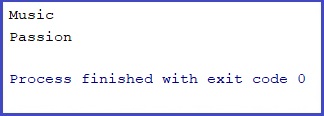
words = ["Love", "Music", "Passion"]
for x in words:
  if x == "Love":
    continue
  print(x)
#FOR in range with decimal example
from decimal import *
for i in xRange(0.0, 0.3, 0.1):
    print(Decimal(i))

#statements
print((0.1 + 0.2) == 0.3)
print(round((0.1 + 0.2), 2) == round(0.3, 2))
print((Decimal(0.1) + Decimal(0.2)) == Decimal(0.3))
print((Decimal('0.1') + Decimal('0.2')) == Decimal('0.3'))
COMPREHENTIONS
# lists comprehensions
x = [i for i in range(5)]
print(x)
y = [i for i in range(10) if i % 2 == 0]
print(y)
# numbers as characters
numsA = ["8", "6", "4", "2", "0","-2"]
nums = [int(i) for i in numsA]
print(nums)

# with statement
L1 = [1,4,3,2,0,6,5,7,8,9
n = [i > 5  for i  in L1]
print(n)
#output:
#[False, False, False, False, False, True, False, True, True, True]
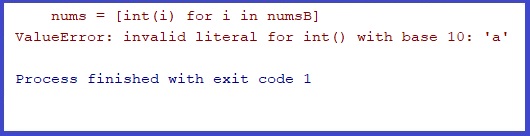
# mix - error!
numsB = ["a", "6", "b", "2"]
nums = [int(i) for i in numsB]
print(nums)
vec_of_vec = [[1, 2, 3], [4, 5, 6], [7, 8, 9]]
single = [num for elem in vec_of_vec for num in elem]
print(single)
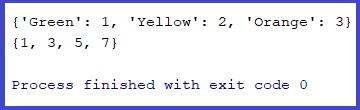
# dict comprehensions - reverse the order
Dict1 = {1: "Green", 2: "Yellow", 3: "Orange"}
print({value: key for key, value in Dict1.items()})
# comprehensions in sets
List1 = [1, 1, 3, 3, 3, 5, 7, 5]
Set1 = {i for i in List1}
print(Set1)
 Heart4DataScience